



AI Agents' Social Media Blind Spot: The Free Fix
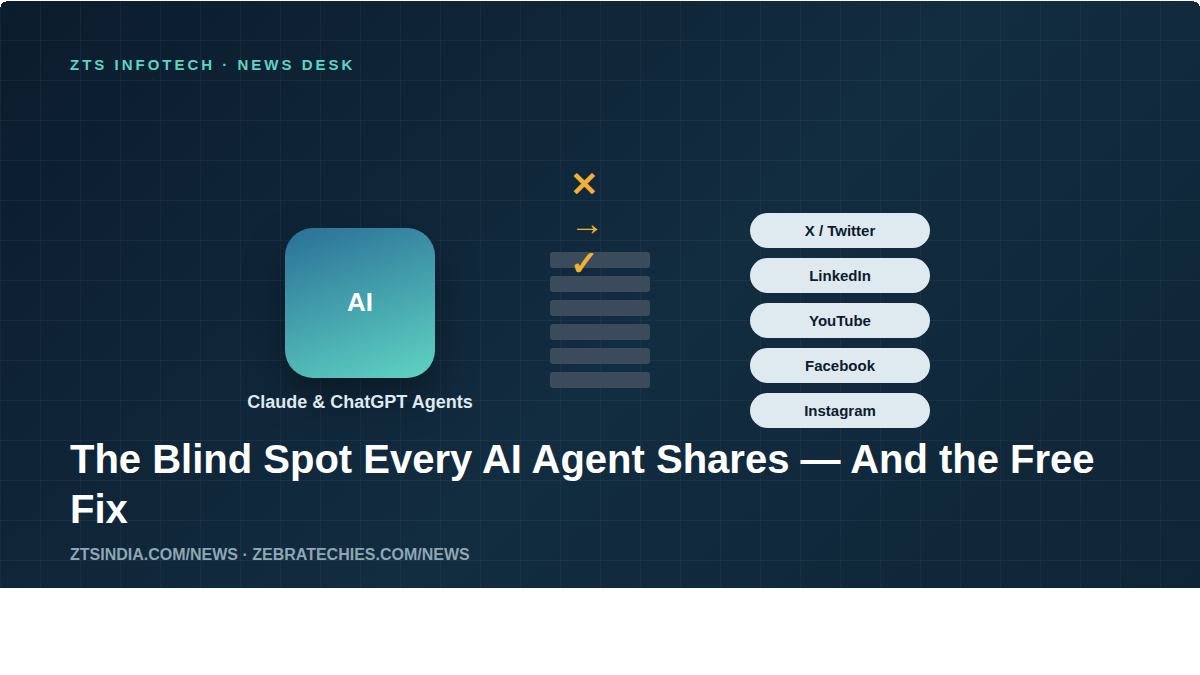
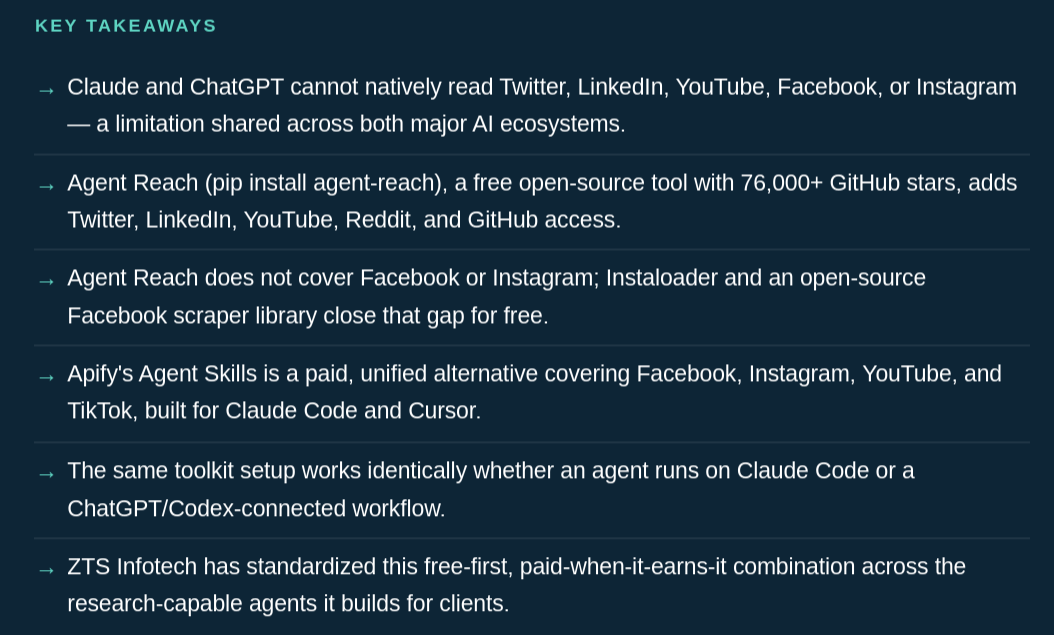
Every enterprise racing to bolt AI agents onto its research and marketing workflows has run into the same wall, even if nobody has said it out loud: the most capable models on the market cannot actually browse social media. Claude and ChatGPT can summarize a pasted transcript, draft a caption, or analyze a spreadsheet, but point either one at a live Twitter thread, a LinkedIn post, or an Instagram grid, and both stall in exactly the same way. That is the starting premise of a new explainer from ZTS Infotech's News Desk, delivered by the company's Anirban Das, and it is a bigger deal than it first sounds. For business leaders who have already told their teams to "just use AI" for competitive monitoring, influencer research, or social listening, this blind spot has likely been quietly limiting results for months.
The Blind Spot Every Enterprise AI Deployment Shares
The problem is structural, not a bug that will be patched away. Large language model platforms are built to reason over text handed to them, not to crawl the open web on their own, and social networks in particular have spent years locking down casual access to their data. The practical result: an agent built on Claude Code or a ChatGPT-connected Codex workflow can be extraordinarily capable at analysis and still be functionally blind to Twitter, LinkedIn, YouTube, Facebook, and Instagram unless something else is doing the fetching for it.
Inside the Free Fix: A Five-Platform Toolkit
The segment lays out a working solution rather than a theoretical one, built from open-source tools that plug into an agent's tool-use layer.
Agent Reach Covers the Bulk of It
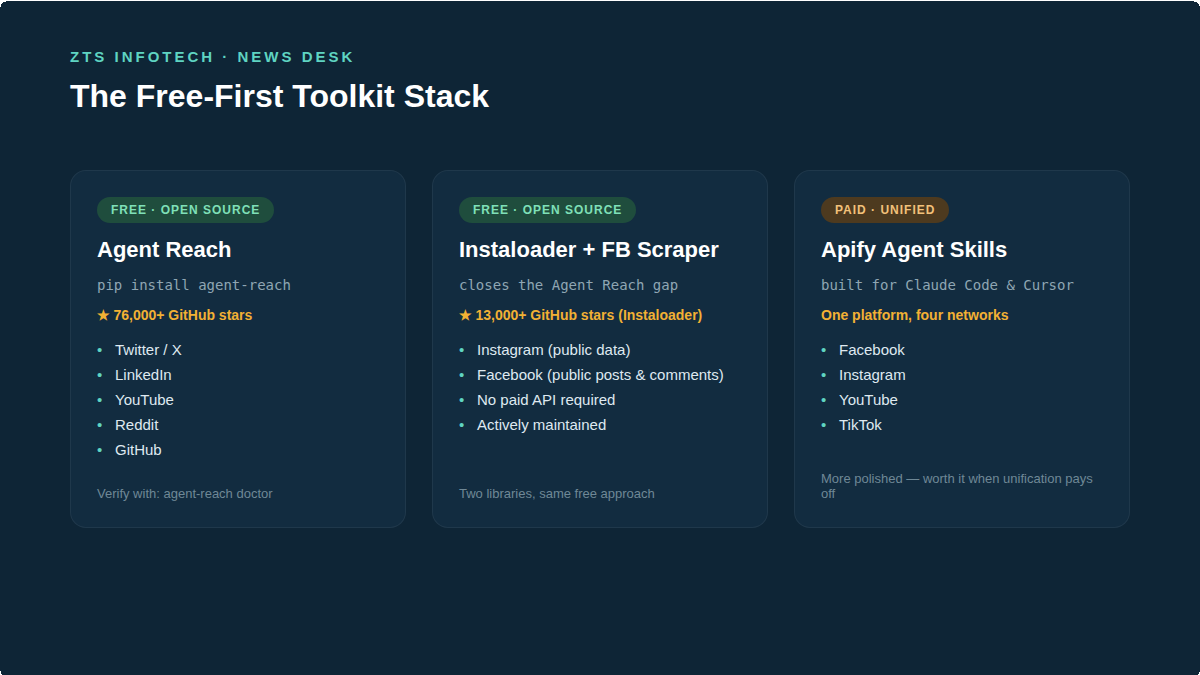
The centerpiece is Agent Reach, installed with a single pip install agent-reach command. According to the segment, the project has crossed 76,000 GitHub stars — nearly double the 38,000-star figure that Das says still circulates in older coverage, a detail worth noting for any team that evaluated the tool months ago and moved on. Running agent-reach doctor after installation confirms which platforms are ready to go. Out of the box, it gives an agent read access to Twitter, LinkedIn, YouTube, Reddit, and GitHub — five of the platforms most business research teams actually monitor day to day.
The Honest Gap: Facebook and Instagram
Agent Reach does not reach Facebook or Instagram natively, and the segment is candid about it rather than glossing over the gap. Closing it takes two additional free libraries: Instaloader, an open-source project with more than 13,000 GitHub stars built specifically for pulling public Instagram data without a paid API, and an actively maintained open-source Facebook scraper library that retrieves public posts and comments the same way. Neither requires a paid developer account.
The Paid Alternative — and When It's Worth Paying
For teams that want one unified system rather than three separate installs, the segment flags Apify's Agent Skills as the paid option worth knowing about. It covers Facebook, Instagram, YouTube, and TikTok in a single platform built specifically to plug into Claude Code and Cursor, and by Das's own account it is "genuinely more polished" than the free stack. The trade-off is straightforward: it is not free, and for a lean marketing team or startup, the open-source combination may deliver most of the same value at zero licensing cost.
Why This Matters for Business Leaders
The toolkit itself is a technical footnote. The strategic point is that it works identically across the two ecosystems most enterprises have already standardized on — point it at Claude Code and the agent reads Twitter and LinkedIn directly; point the same setup at Codex or a ChatGPT-connected agent and, per the segment, it behaves the same way. That consistency matters for procurement and IT teams trying to avoid vendor lock-in while still giving research-capable agents real access to competitive and market signals.
E X P E R T P E R S P E C T I V E
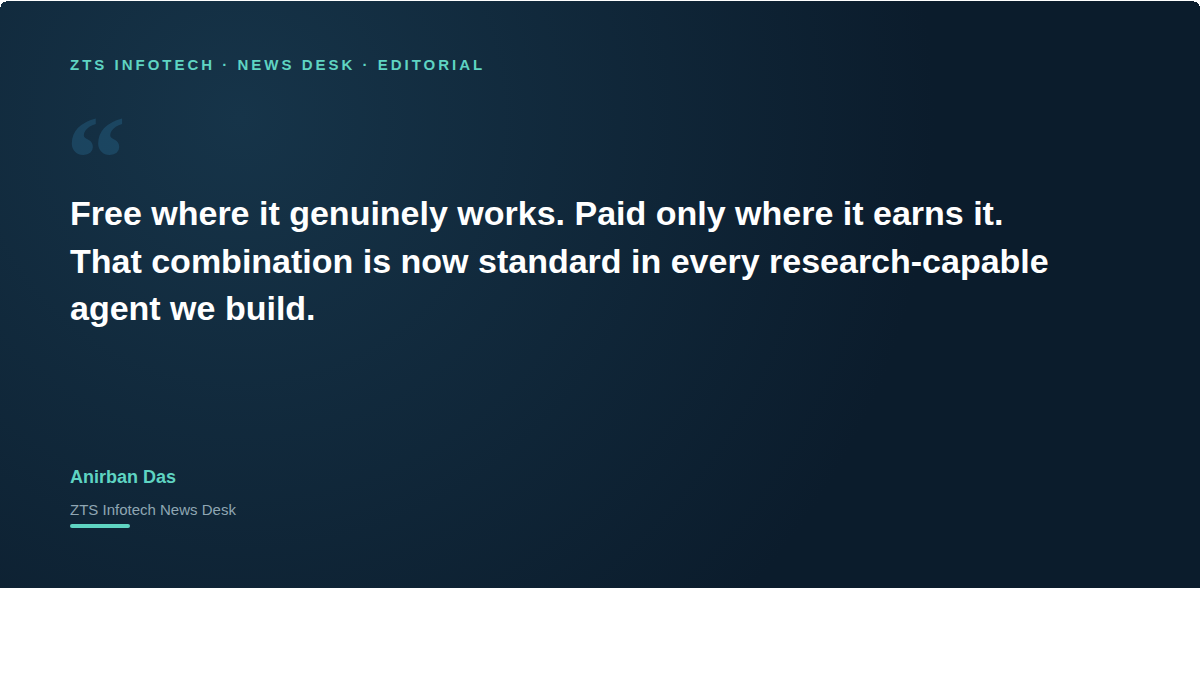
What stands out here is less the individual tools than the pattern ZTS Infotech is describing internally: free where a mature open-source option exists, paid only where the convenience demonstrably earns its cost. That is a more disciplined procurement posture than most companies apply to AI tooling today, where subscription sprawl is already a quiet budget problem. Teams that adopt this kind of layered approach — open-source connectors as the default, paid platforms reserved for genuine unification needs — are likely to see AI research and social-listening costs stay far more predictable as usage scales. The bigger signal is that "agent can't read the open web" is becoming a solved problem faster than most IT roadmaps assumed, which should push digital transformation leaders to revisit any AI rollout that was scoped around this limitation even six months ag
Where This Leaves Business Leaders
Social media access has been an unglamorous but real ceiling on what business AI agents can actually do, and this explainer is a reminder that the ceiling is lower than many procurement decisions assume. Companies still budgeting for expensive data-access platforms by default may want to revisit that assumption before their next renewal cycle. As open-source tooling around agent connectivity keeps maturing, expect the gap between "AI that can chat" and "AI that can actually research the live web" to keep closing — and expect the businesses paying attention to these free fixes to move faster than the ones that aren't.

By Professional qualification a Computer Engineer, By Profession an Online Marketing Strategist and Web Application Development Expert, By Industry position working as a CEO at Zebra Techies Solution!