



No Developer Needed: Small Business Vibe-Coding Guide
Compare real monthly pricing across Claude, ChatGPT, Cursor, and Z.ai's GLM to build a working business app this month, without hiring a developer.
Published August 20, 2026 | Category: AI (Technology / Business Growth) | Source: ZTS Infotech AI News Desk
Every small business owner who has priced out a website or an internal tool knows the quote that follows: a few thousand dollars, a multi-month timeline, and a developer relationship to manage on top of running the business itself. What most owners still don't know is that the calculus has changed — not incrementally, but by an order of magnitude, according to a workflow breakdown from ZTS Infotech's AI News Desk.
Theagencylaidoutwhatitcallsanhonest,tool-by-toolpricingcomparisonfor“vibecoding”—describing anappinplainlanguageandlettinganAIcodingagentbuildit—alongwitharealclientexamplethat puts hard numbers against the claim.
For business owners still assuming custom software means a five-figure line item and a long procurement cycle, this is worth a closer look. For owners already dabbling in AI tools, the useful part may be less about whether this works and more about which of four real options fits a given budget.
Four Tools, Honest Pricing
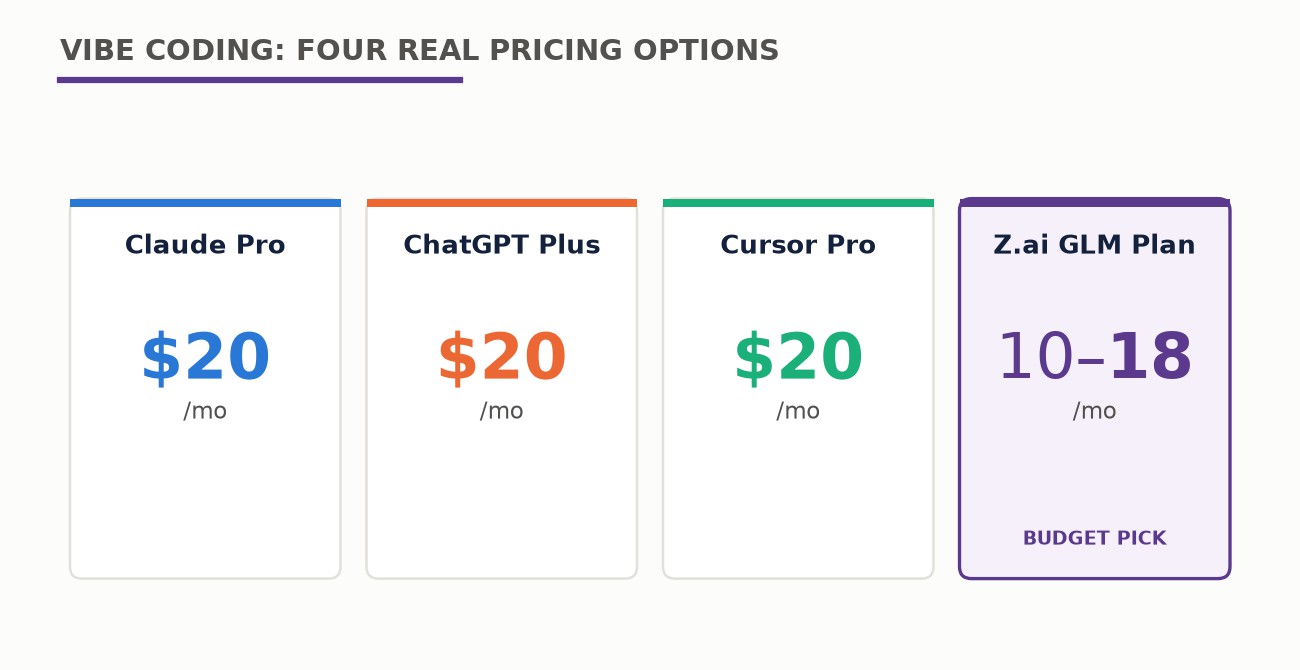
Rather than defaulting to the two most talked-about options, the breakdown compares four:
-
Claude Pro — $20/month, includes Claude Code
-
ChatGPT Plus — $20/month, includes OpenAI's coding agent
-
Cursor Pro — $20/month
-
Z.ai's GLM Coding Plan — $10–$18/month, built on Z.ai's open GLM model, and compatible with Claude Code, Cline, and most other coding-agent interfaces already in use
The inclusion of GLM is the more interesting data point for cost-conscious owners: it plugs into the same tooling as the Western options at a lower monthly price, which ZTS Infotech argues makes it worth comparing before defaulting to a pricier plan out of habit rather than evaluation.
A Second Method: Building an App by Talking to It
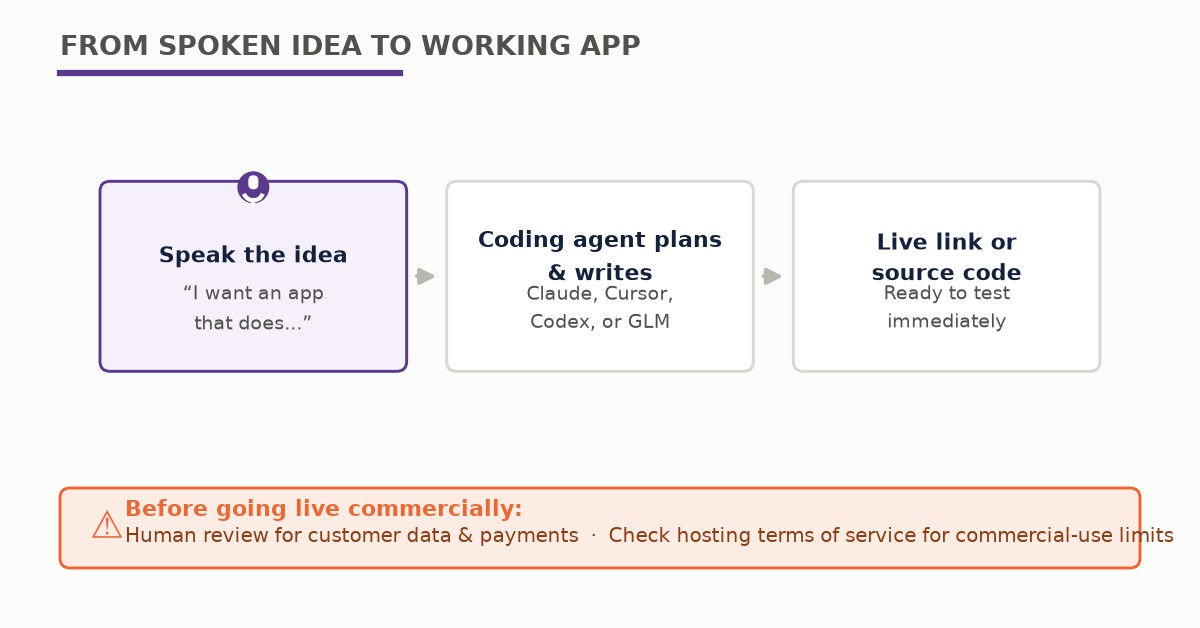
The workflow described goes a step further than typed prompts. Speech-to-text lets an owner describe an application out loud — the way they'd explain it to a person — and feed that description directly into a coding agent. The agent plans the build, writes the code, and returns either a live testable link or full downloadable source code, with no typing required from start to finish.
The Client Example: $5,000 vs. $20
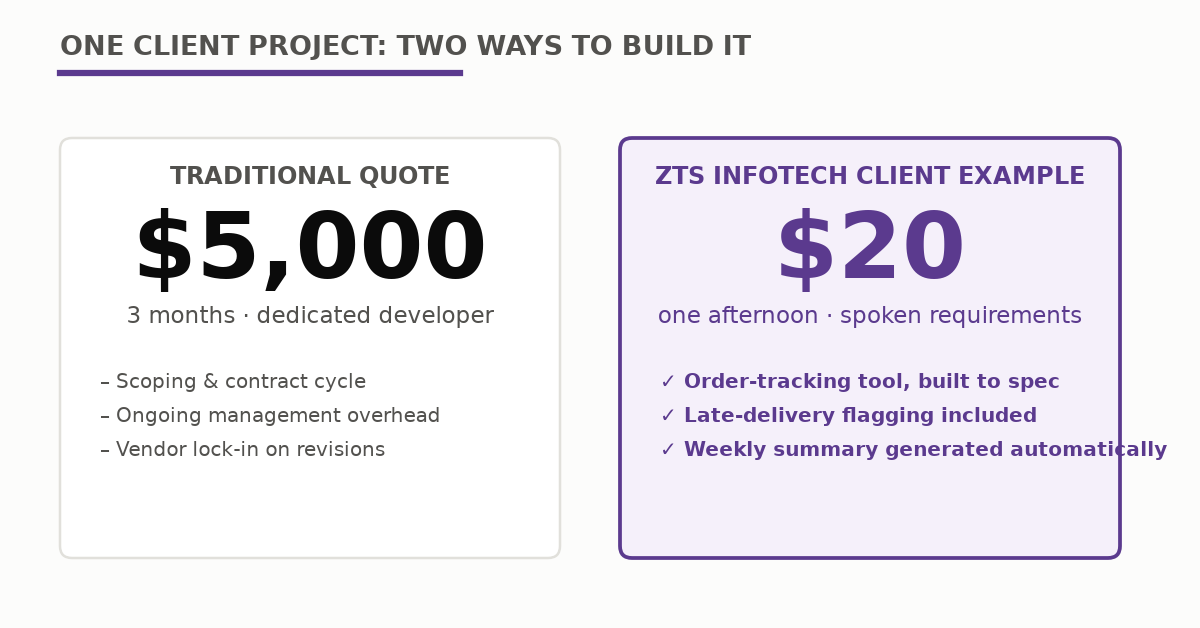
ZTS Infotech cited a real engagement to illustrate the gap. A local retail client needed an internal tool to replace a messy spreadsheet for tracking supplier orders. The team described the requirement in plain English — track orders, flag late deliveries, generate a weekly summary — and the tool was built in one afternoon. Total cost: $20, against a traditional quote the agency frames at roughly $5,000 and three
months.
The Caveat That Matters for Commercial Use
The agency was explicit that this isn't a free pass on due diligence. AI-generated code — typed or spoken — is described as a strong starting point, not a finished, audited product. Anything touching customer data or payments needs human review before it goes live. Hosting platform terms of service are a second checkpoint: several free or low-cost tiers explicitly restrict commercial use, which can create a compliance problem after a tool is already in production.
Business Implications
For Budget Planning
Custom internal tooling no longer needs to compete for a dedicated software budget line. At $10–$20 a month, the cost of experimentation is low enough that testing an idea carries little downside — which shifts the real constraint from budget to owner time and review discipline.
For Vendor Selection
With four viable tools at different price points, and most of them interoperable with the same interfaces, there's little reason for a business to lock into one platform. ZTS Infotech's own approach — testing across all four and picking based on budget and use case rather than brand preference — is a reasonable default for other teams evaluating the same tools.
For Risk Management
The commercial-use caveat is the section owners are most likely to skip, and the one most likely to cause a real problem later. A tool built in an afternoon for $20 can still create liability if it handles customer data without review, or if it's hosted on a plan whose terms of service prohibit commercial deployment. Both are checkable before launch, not after.
Expert Perspective
The headline number here — $20 versus $5,000 — is real but slightly misleading if read as "software development just got free." What actually changed is the cost of a first working draft. The traditional quote priced in scoping, revisions, and ongoing developer management alongside the build itself; the vibe-coded version compresses the build to near-zero cost and shifts the remaining effort onto the business owner's own review and iteration.
That's a favorable trade for a huge number of small business use cases — internal trackers, simple dashboards, workflow tools — where the requirements are well understood internally and the software doesn't need to survive an audit. It's a materially different trade the moment customer data, payments, or regulatory exposure enter the picture. The tool that gets a business to a working prototype in an afternoon is not automatically the tool that should still be running unreviewed six months later.
Key Takeaways
-
Four real pricing options exist for AI-assisted app building: Claude Pro ($20/mo), ChatGPT Plus ($20/mo), Cursor Pro ($20/mo), and Z.ai's GLM Coding Plan ($10–$18/mo)
-
GLM plugs into the same interfaces as Claude Code and Cline, making it a lower-cost option worth comparing before defaulting to Western tools
-
Voice-based building is now viable: describe an app out loud, get back a live link or downloadable source code, no typing required
-
A cited ZTS Infotech client example: a supplier order-tracking tool built in one afternoon for $20, versus a traditional quote of roughly $5,000 and three months
-
AI-generated code is a starting point, not an audited product — human review is required before anything touching customer data or payments goes live
-
Hosting platform terms of service should be checked before launch — some free/low-cost tiers explicitly block commercial use
-
ZTS Infotech tests across all four tools and selects based on client budget and use case, not brand preference
Conclusion
The gap between a $5,000 developer quote and a $20 working prototype is large enough that small business owners who haven't revisited their assumptions about custom software in the last year are likely working from outdated numbers. The tools are no longer the hard part; the discipline to review what they produce before it touches real customers and real payment data is. Expect the more durable competitive advantage to sit with the businesses that build fast and review carefully, not just the ones that build fast.

By Professional qualification a Computer Engineer, By Profession an Online Marketing Strategist and Web Application Development Expert, By Industry position working as a CEO at Zebra Techies Solution!